F W Muller Model 5 Toy Sewing Machine
F W Muller, Model 5 Toy sewing machine
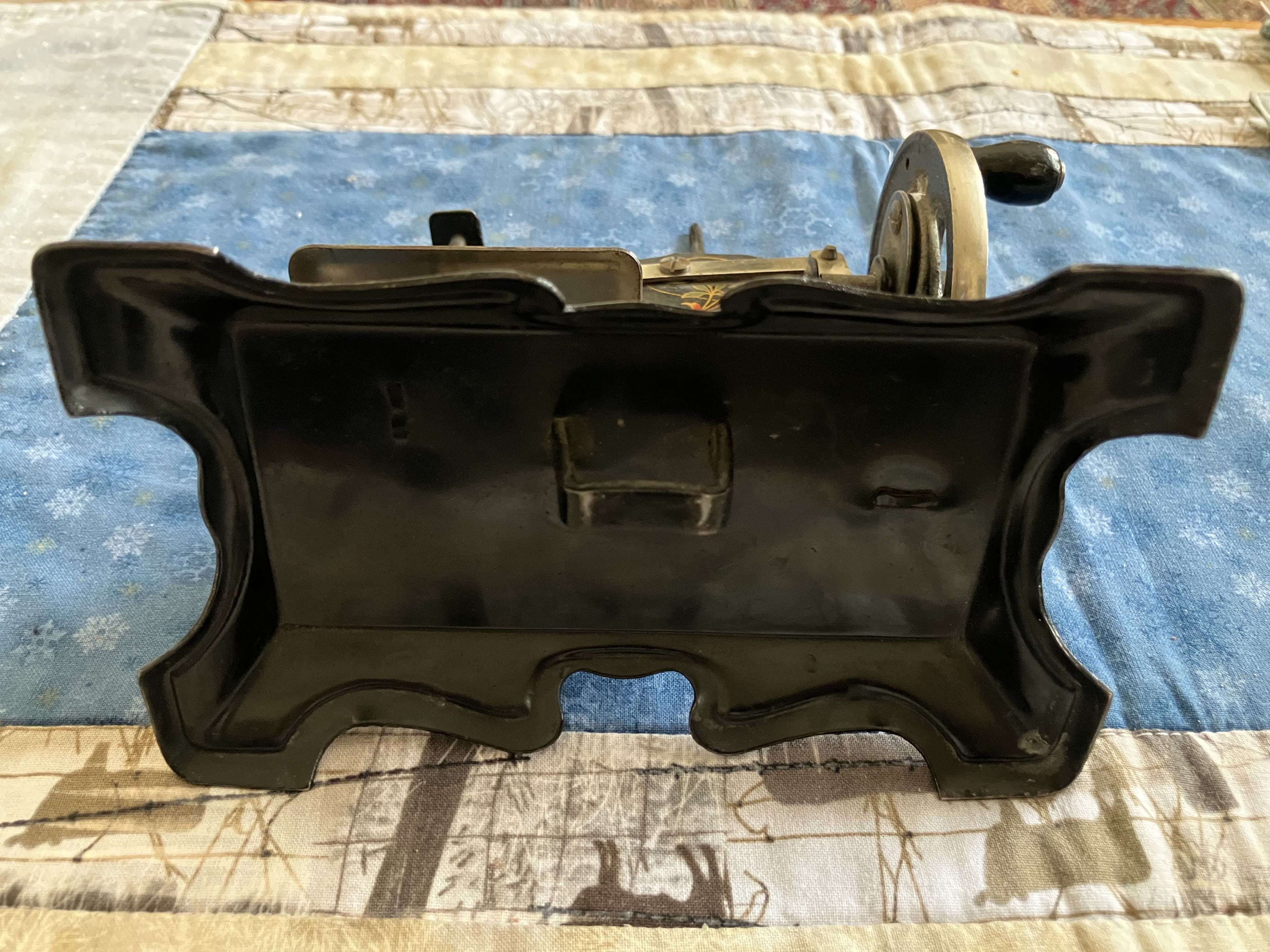
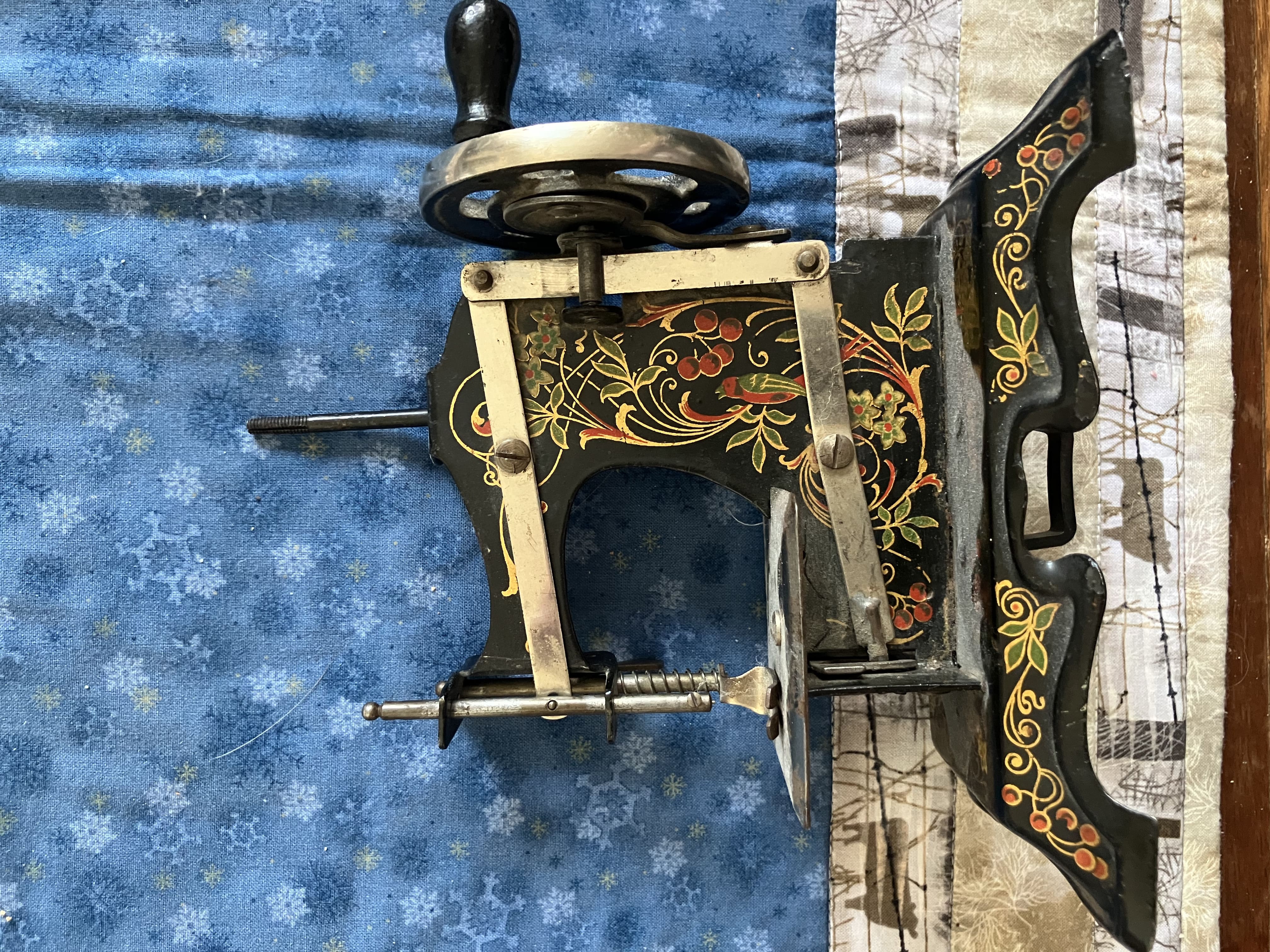
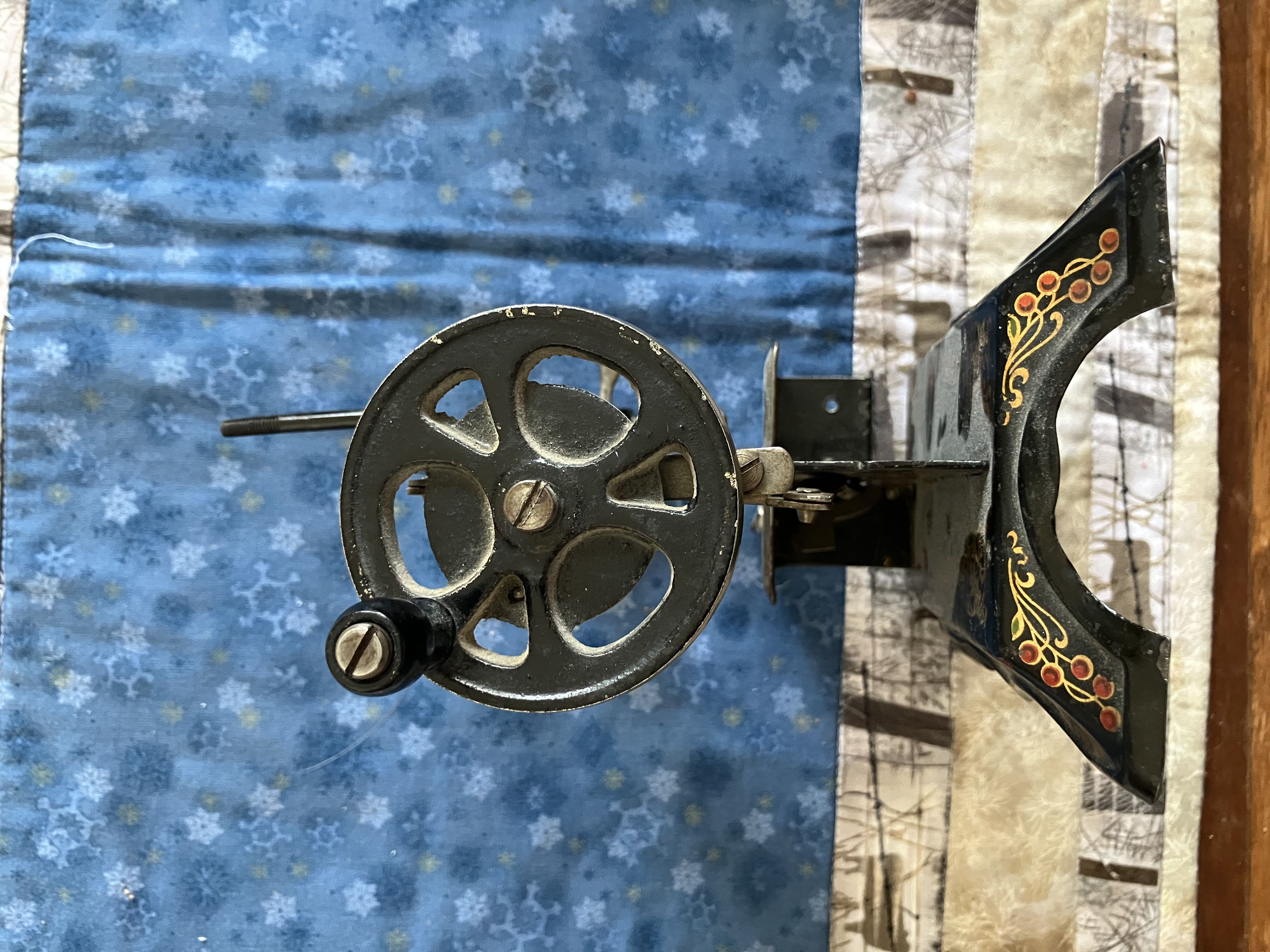
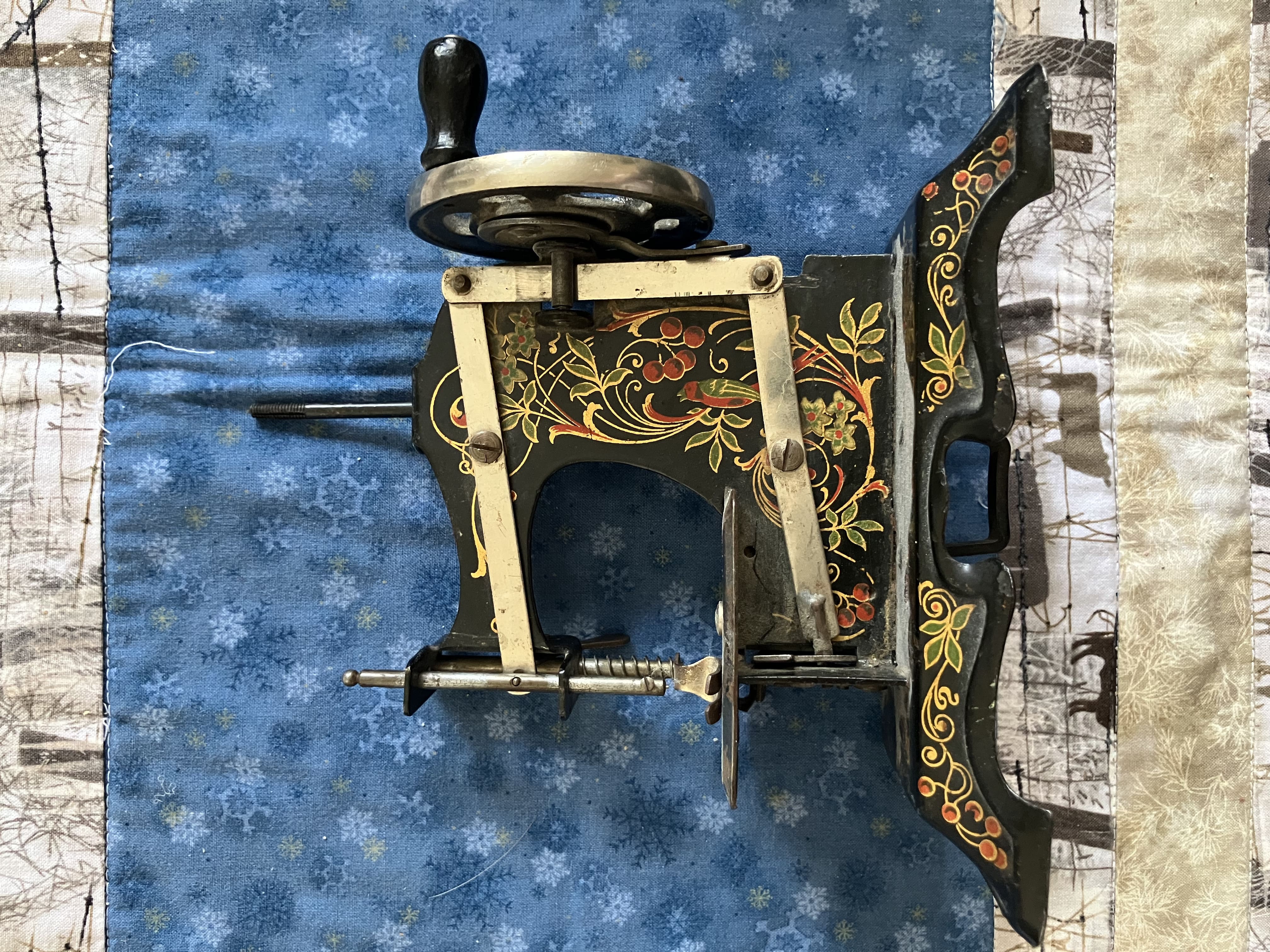
Provenance and History
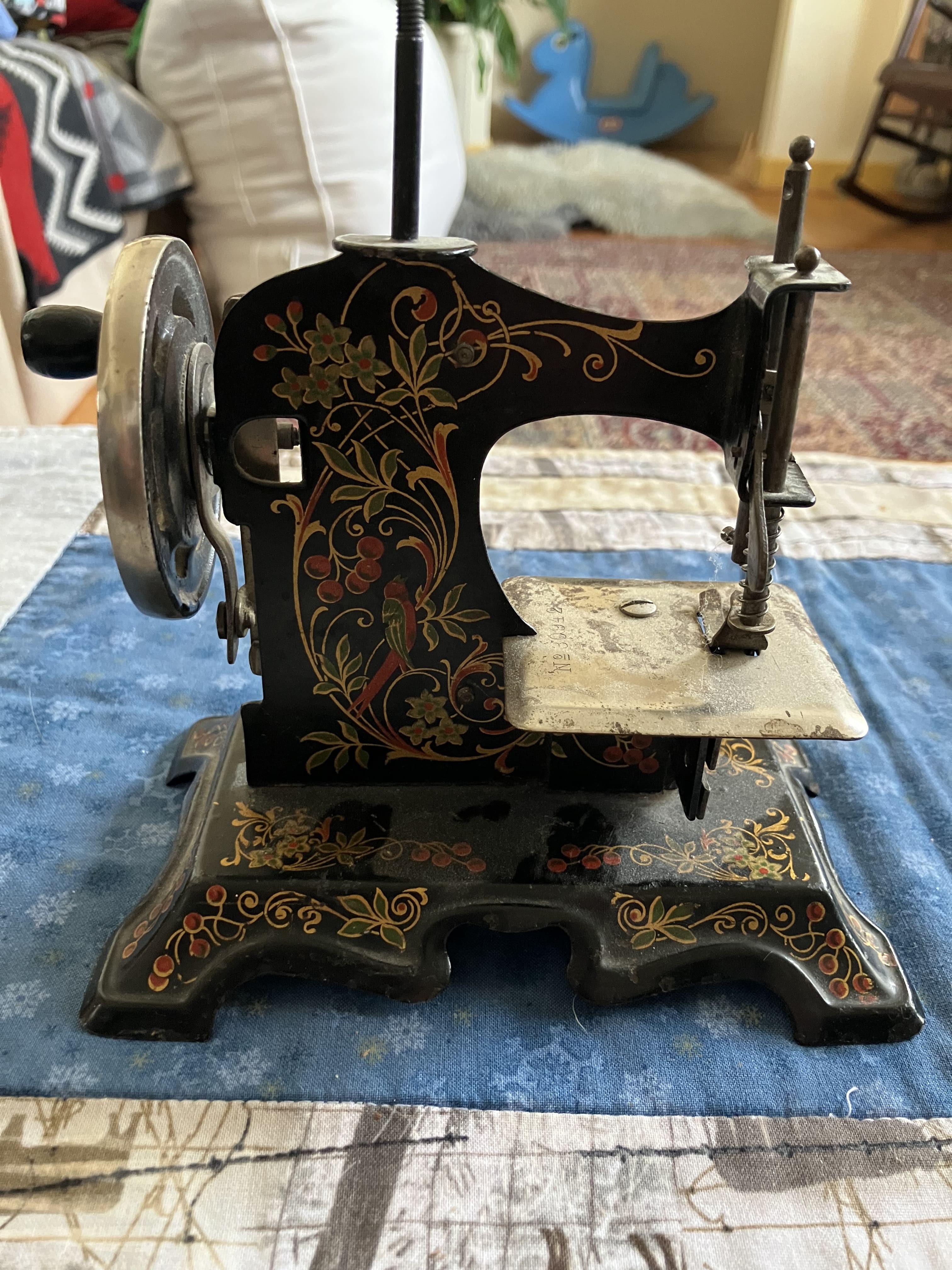
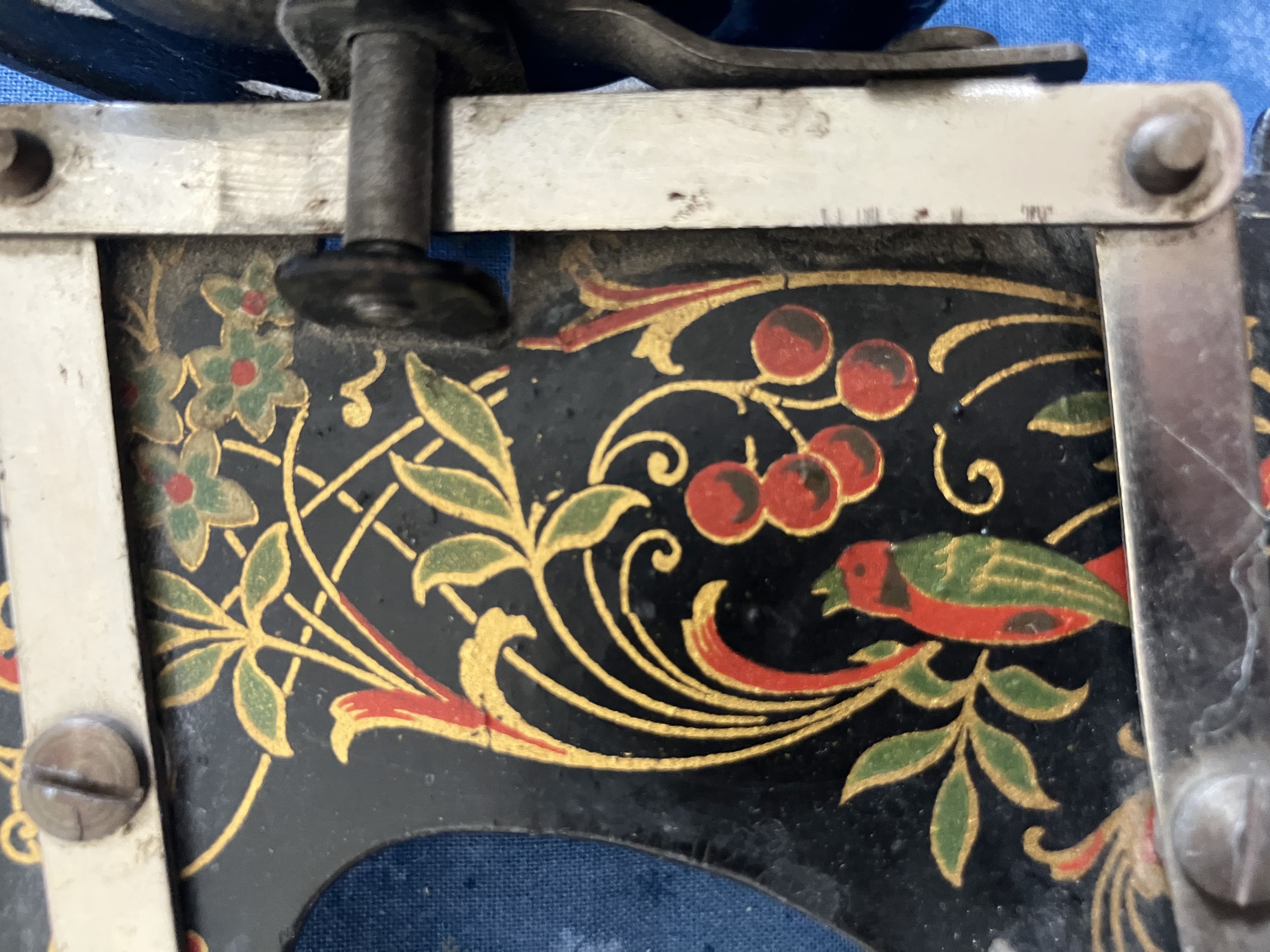
This F W Muller Model 5 Toy sewing machine is a classic example of early 20th-century German toy machine manufacturing. These miniature machines were often given as gifts to children and were fully functional, capable of sewing light fabrics.
The specific provenance of this machine is not fully documented, but it was likely cherished by a young owner and used for learning and play. Its survival in such good condition suggests it was valued and carefully stored over the years.
Condition and Evidence of Use
The machine is in very good condition for its age, with most of the original paint and decals intact. There is minor wear consistent with gentle use, and all moving parts operate though there is a hitch in the lowest point of operation.
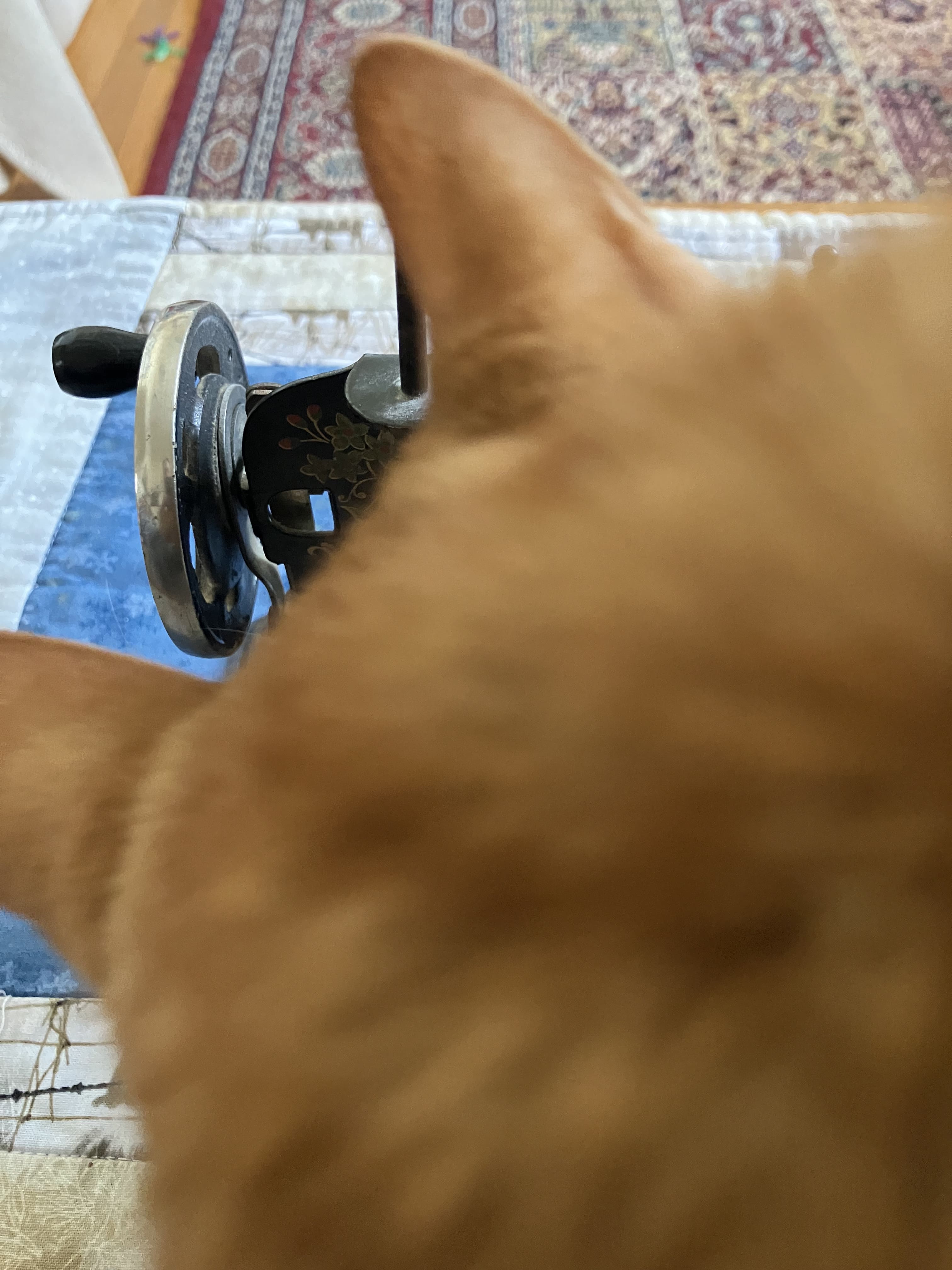
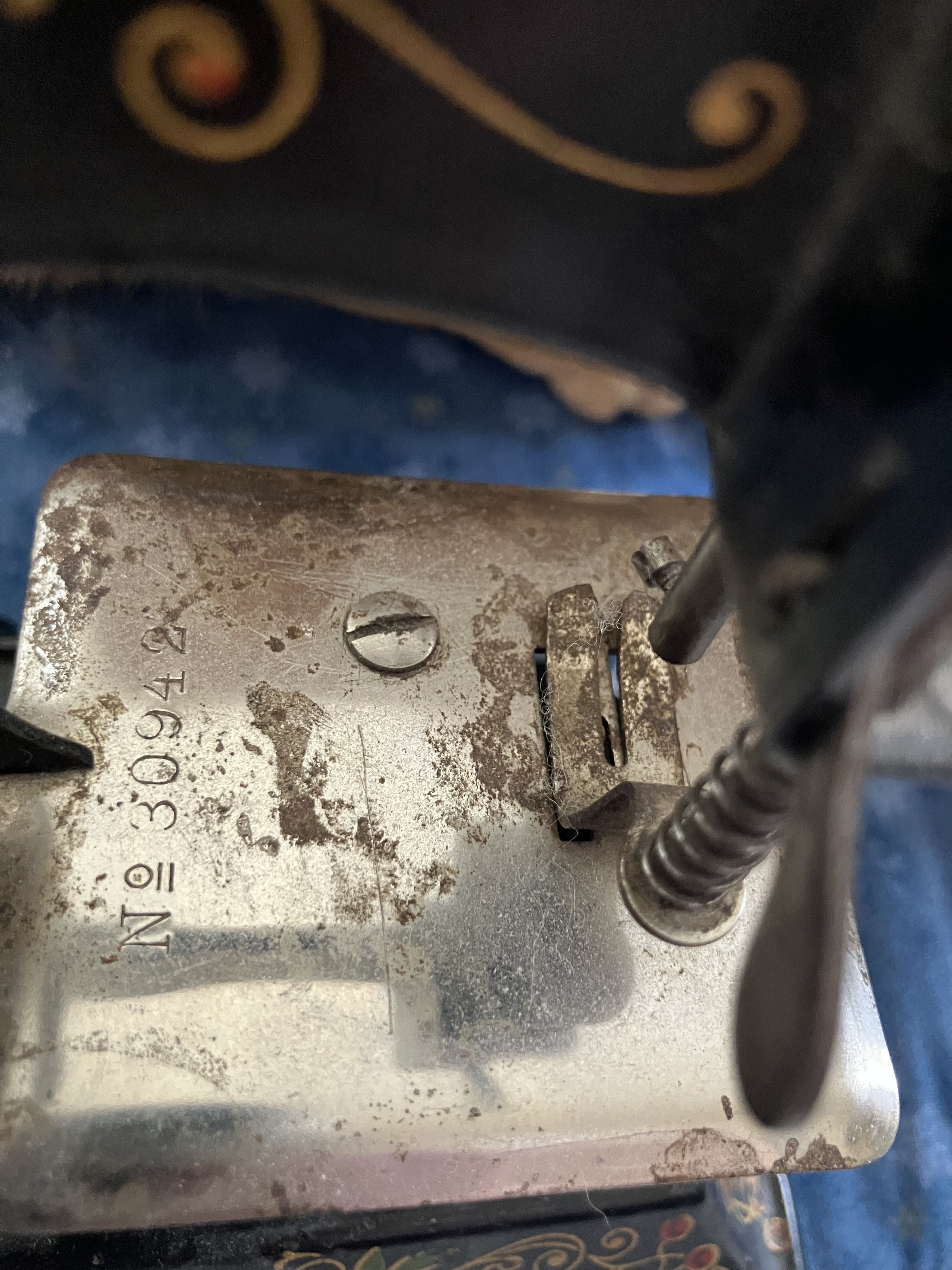
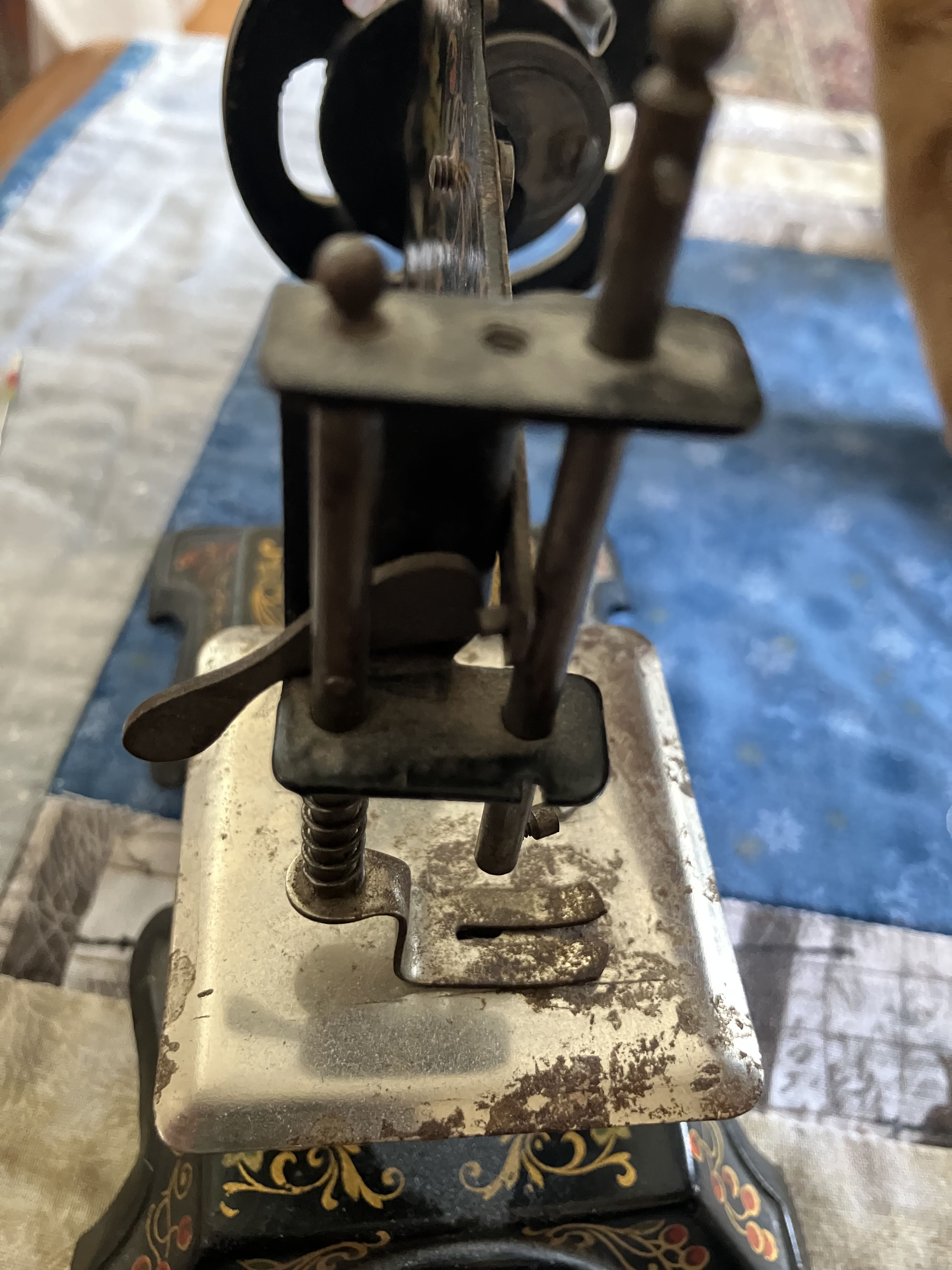
There is no significant rust or corrosion to the body. Some nickel-plated surfaces show rust at abrasion points. The hand crank mechanism is smooth and unblemished. The wooden knob is in good shape. The machine appears to have been well cared for and stored in a dry environment. The machine is missing a few small components: tension knob on threaded spool stem, wire spring guide for thread, screw holding the dog mechanism in place, and needle.
Current Status
Status: In care
Location: The Sewing Machine Orphanage, Devon, Alberta
Stewardship Notes
The machine was gently cleaned and lubricated. No restoration was performed beyond basic cleaning to preserve its originality and patina. A screw was threaded in the feed dog mechanism.
Resources and References
About F W Muller Toy Sewing Machines
Friedrich Wilhelm Muller of Berlin began producing toy sewing machines around 1885. Early models were made of cast iron, later shifting to lighter, colorful tin plate designs that appealed to children. Muller's machines were widely exported and labeled with various marks, including 'Made in Germany' and production numbers. After World War II, the factory resumed production using pre-war parts, and later models included innovations such as battery operation. Muller's company was one of the most successful German toy sewing machine manufacturers, with production continuing until the 1970s. For a detailed history, see:
- German Made Toy Sewing Machines – Singer Sewing Info
- F W Muller Toy Sewing Machines (Fiddlebase)
- ISMACS Toy Sewing Machines
- Summary of ISMACS article on Muller: The article distinguishes between two German Muller companies, focusing on Friedrich Wilhelm Muller Jr. of Berlin, the most prominent toy sewing machine maker. Founded in 1868, the company began as a parts supplier before producing its first toy machines in 1888. Early models were made from painted sheet steel ("flatties"), with machined steel parts either nickel-plated or oiled. Over 80% of production was exported, and the company survived both World Wars, later introducing hand, battery, and mains-powered toys. Model numbers ranged from 0 to 70, but numbering was not strictly chronological. Notable innovations included the walking presser foot and top-feed mechanisms. Today, Muller toys are highly collectible, especially treadle and colored cast-iron models. For the full article, see ISMACS: Muller Toy Sewing Machines.