On the Use of the Word “Orphanage”
The Sewing Machine Orphanage uses language carefully. The word orphanage carries deep historical weight, shaped by centuries of social policy, poverty, migration, colonialism, and institutional harm. For many people, it evokes loss, separation, and injustice experienced by children and families across generations.
We acknowledge this history directly. We recognize that institutions labeled as orphanages have too often been sites of trauma, coercion, and systemic failure. The use of this term here is not intended to diminish or abstract those experiences, nor to romanticize them. Rather, it is used deliberately, with historical awareness and ethical restraint.
“An Orphaned Sewing Machine”
The name of this project is grounded in historian Laurel Thatcher Ulrich’s essay, “An Orphaned Sewing Machine”, published in Harvard Magazine in 2017. In that essay, Ulrich uses the phrase orphaned sewing machine to describe an object separated from the people, places, and stories that once gave it meaning.
The sewing machine she encounters is not abandoned in a literal sense. It is cared for materially, yet disconnected from its human history. Ulrich’s use of the word orphaned draws attention to absence: the absence of context, memory, and relational knowledge. The machine survives, but its story does not.
In this sense, orphaned names a condition of historical dislocation rather than neglect. It describes what happens when objects outlive the social worlds that once surrounded them.
Reclaiming the Term with Care
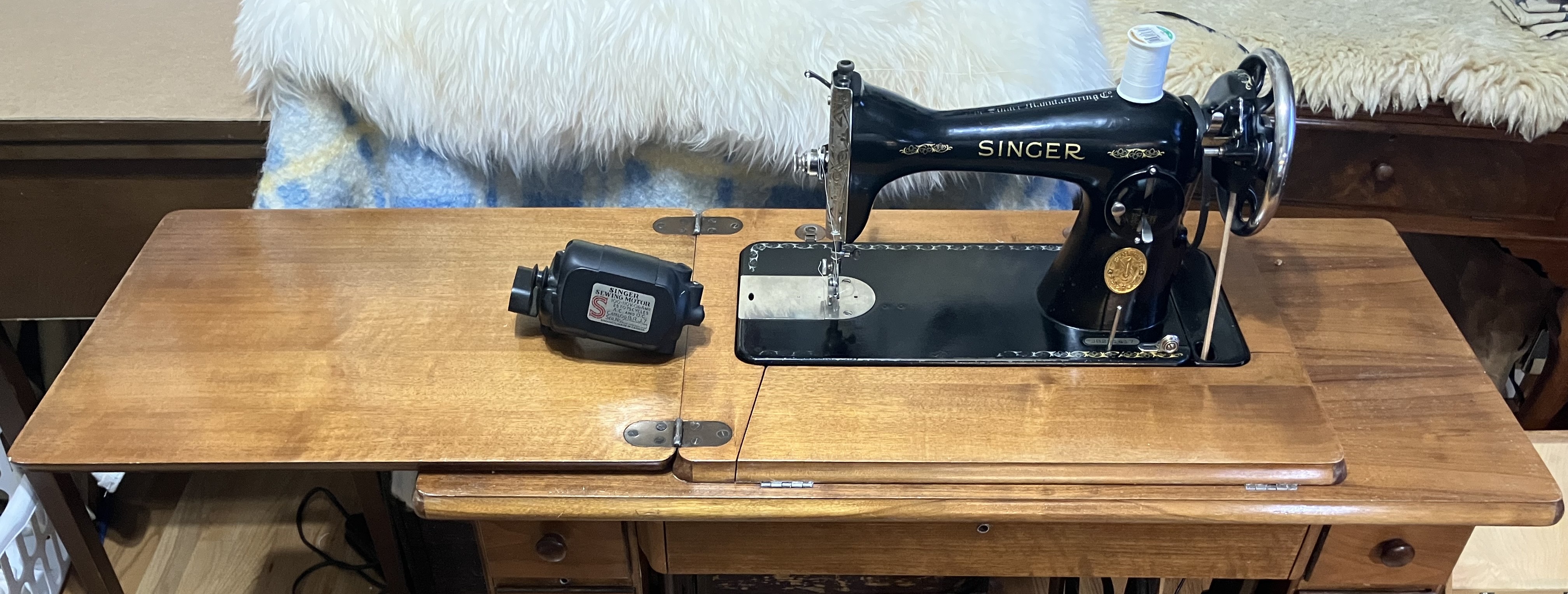
The Sewing Machine Orphanage adopts this language in the same spirit. We use orphan and orphanage metaphorically, to describe sewing machines that have lost their interpretive and familial frameworks, even when they have been kept with care.
This use does not equate objects with people, nor does it collapse the suffering of children into material metaphor. Instead, it draws on Ulrich’s insight that objects, like people, can be separated from the narratives that once sustained them.
By naming this condition, we aim to counter it. The Orphanage exists not to institutionalize, but to reconnect: to reunite machines with history, context, and responsibility.
Stewardship, Not Possession
In contrast to historical orphanages that removed children from families and communities, this project emphasizes stewardship in partnership with ownership. Families who donate or place machines are not relinquishing value or memory. They are ensuring continued care when circumstances change.
The Sewing Machine Orphanage exists because many families wish to preserve meaningful objects but no longer have the space, capacity, or resources to do so. In this context, stewardship is an act of respect, not abandonment.
Language as Responsibility
Words shape how we think about care, loss, and responsibility. We use the word orphanage openly, and we invite conversation about it. If it prompts discomfort, reflection, or questioning, that response is valid and welcomed.
Our commitment is to ensure that this language is matched by practice: transparency, consent, documentation, and respect for family and community histories.
No sewing machine here is treated as disposable. No story is treated as secondary.
Further Reading
Ulrich, Laurel Thatcher. “An Orphaned Sewing Machine.” Harvard Magazine, January–February 2017. https://www.harvardmagazine.com/2017/01/an-orphaned-sewing-machine